Working as a hostess during a trade fair or event means representing a company's image for a few hours or days.
The client may have invested heavily in participating in the event. They have organized the booth, transported products, and arranged meetings with clients and distributors. The hostess becomes part of this project and contributes to the first impression perceived by visitors.
Being professional does not simply mean wearing a nice dress.
Professionalism comes from a combination of many elements: punctuality, preparation, personal care, communication skills, and respect for agreements.
A hostess may have an interesting profile and speak many languages. However, if she arrives late, is unfamiliar with the required tasks, or appears disinterested, she risks compromising the client’s experience.
Conversely, a serious and well-prepared person can become a very valuable presence within the booth and be remembered for future opportunities.
Outfit and Makeup: Presenting Yourself Well Without Losing Naturalness
The dress code always depends on the type of event and on the instructions received.
In some situations, the client provides a personalized uniform or branded clothing. In other cases, the hostess is asked to wear her own professional outfit.
The most common solution for a business trade fair is classic and neat attire.
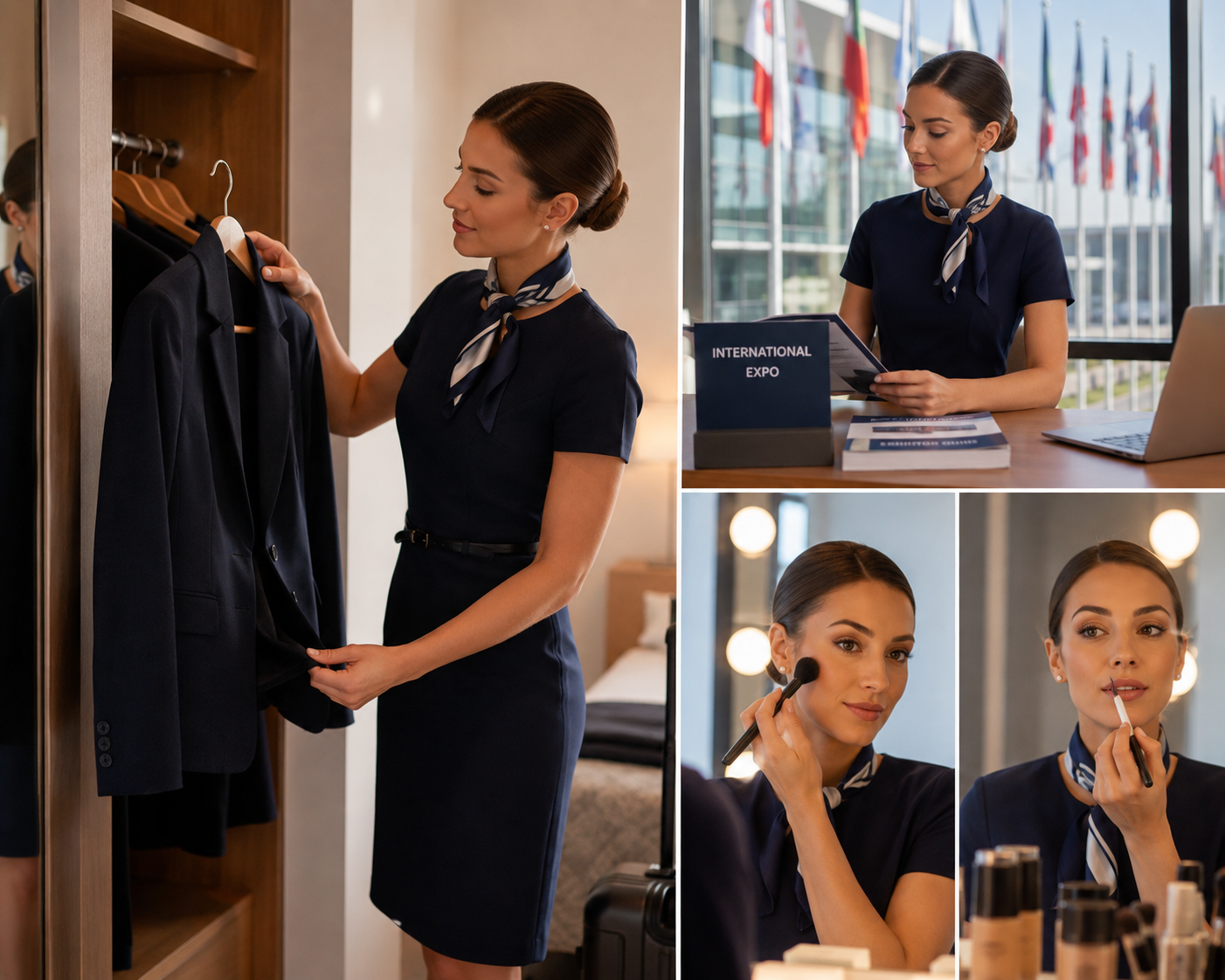
A jacket with trousers or a skirt and a blouse usually represent a safe choice. Neutral colors like black, dark blue, and white are easy to match and suitable for most booths.
Clothing must be clean, ironed, and the right size. An elegant item that restricts movement or requires constant adjustments is not a good choice for a trade fair day.
Shoes must also comply with the dress code.
When heels are required, it’s important to choose a model already worn and comfortable enough to be worn for several hours. Showing up with new, painful shoes can make it very difficult to maintain energy and posture throughout the day.
If the client requests a specific outfit, it must be respected without improvising personal variations.
The hostess is not choosing what to wear for a private evening. She is embodying the image indicated by the company for a specific event.
Makeup should be neat and professional.
At most trade fairs, a natural look that enhances the face without appearing excessive is preferable. The base should be tidy, and eye makeup should be clean. Lipstick can be neutral or a bit more noticeable when the context allows.
Hair and hands contribute equally to the presentation.
Hair must be clean and neat. Nails should be well kept with sober colors unless otherwise indicated. Very strong perfumes should be avoided because the hostess works in close contact with many people.
It’s useful to prepare everything needed the night before.
Outfit, shoes, badge, documents, and products for minor touch-ups should already be arranged. Preparing in advance reduces stress and minimizes the risk of forgetting something.
- carefully read the received dress code
- check if the client provides a uniform
- choose clean, ironed, and properly sized clothes
- prefer sober colors when no different instructions exist
- wear professional shoes already tried on
- keep makeup neat and natural
- arrive with hair and hands well groomed
- avoid excessively strong perfumes
- prepare everything the night before
- carry essentials for minor touch-ups
Travel and Attitude: Professionalism Begins Before Arrival
A hostess’s preparation does not begin when she enters the booth.
It starts the moment she reads the job information and decides whether to apply.
Before confirming availability, it is necessary to carefully check the city, the exact location, the schedule, and the required tasks.
Prima Hostess’s standard policy states that travel and accommodation are not reimbursed separately unless otherwise specified in writing.
The published fee is usually all-inclusive. The professional must independently evaluate how to reach the event and whether transport or accommodation expenses are necessary.
Even when a client selects a Premium hostess and offers a higher fee, it is normally the professional’s responsibility to organize her own travel and any accommodation needed.
For this reason, one should not apply by only looking at the fee.
It is necessary to calculate the real travel cost and the time required to reach the activity location and the overall sustainability of the assignment.
The route should be studied before the event.
It is advisable to check public transport, parking, and entrances to the trade fair district. There should be enough margin for delays, platform changes, and queues at entrances.
Arriving exactly at the indicated time may mean being already late.
The hostess must have enough time to reach the booth, meet the contact person, receive any last instructions, and settle her personal belongings.
Once the activity begins, attitude becomes as important as clothing.
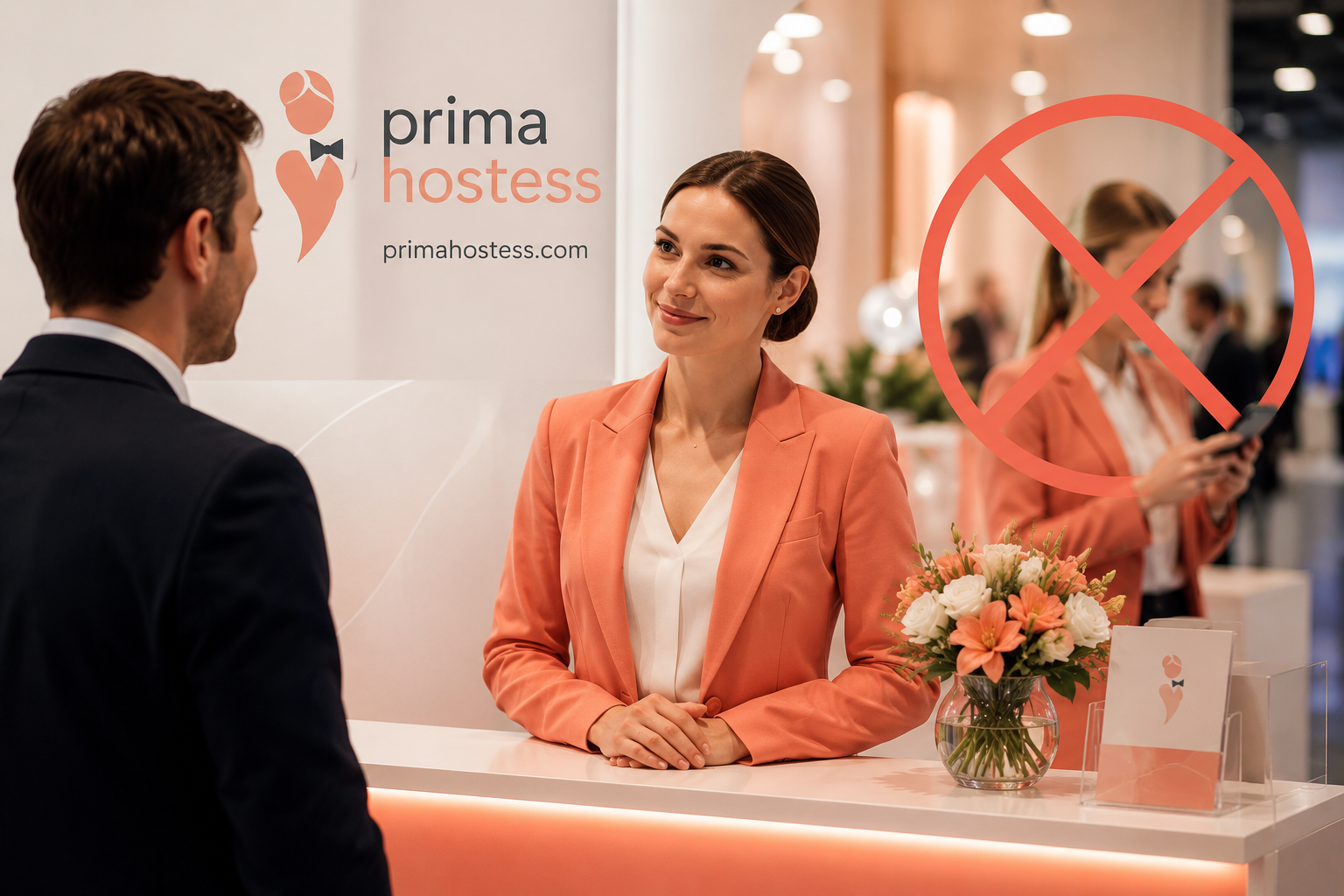
The hostess must appear present and available. She should not stand with arms crossed or constantly use her phone or engage in long conversations with other staff members while ignoring visitors.
Being proactive does not mean inventing activities or overstepping one’s role.
It means observing the situation and noticing when a visitor needs to be welcomed, when materials need to be arranged, or when sales staff need support.
A serious professional maintains the same level of attention even in the final hours of the day.
Trade fairs can be intense. It may be necessary to stand for long periods and repeat the same information many times. Fatigue is normal. However, it should not turn into visible disinterest or complaints in front of clients and visitors.
Respecting commitments is also fundamental.
A last-minute cancellation can cause a major problem because the client has already organized the booth counting on the confirmed person’s presence.
Real unforeseen events can happen. When they do, they must be communicated immediately and clearly. Disappearing or waiting until the last moment to report a problem damages one’s professional reputation.
Reliable hostesses are remembered.
A punctual, positive person who respects agreements can receive new offers, participate in more important events, and build a Premium profile over time.
- verify city and exact location before applying
- consider that the fee is normally all-inclusive
- independently calculate travel and potential accommodation
- study the route before the event
- allow margin for delays and unforeseen events
- arrive at the booth before the start time
- read the briefing and ask for clarifications in advance
- limit personal phone use
- maintain energy and attention throughout the day
- immediately communicate any real problems
- respect every confirmed assignment
- build your reputation through reliability
Professionalism Is Seen in the Details No One Should Have to Remind
A good hostess does not wait for someone to remind her to be punctual, read the briefing, or show up in an appropriate outfit.
She understands that every detail contributes to the quality of service and the client’s image.
Outfit and makeup are important. Travel, organization, attitude, and seriousness are even more so.
Every assignment can become an opportunity to demonstrate reliability, improve your profile, and access new activities.
Prima Hostess offers opportunities related to individual professional freelance assignments during trade fairs and events in Germany and other European countries.
Tasks, schedules, fees, and dress codes are communicated before confirmation so that every person can evaluate the proposal consciously.
A professional profile can attract attention.
Professional behavior is what makes you memorable.